 AI CLOCK
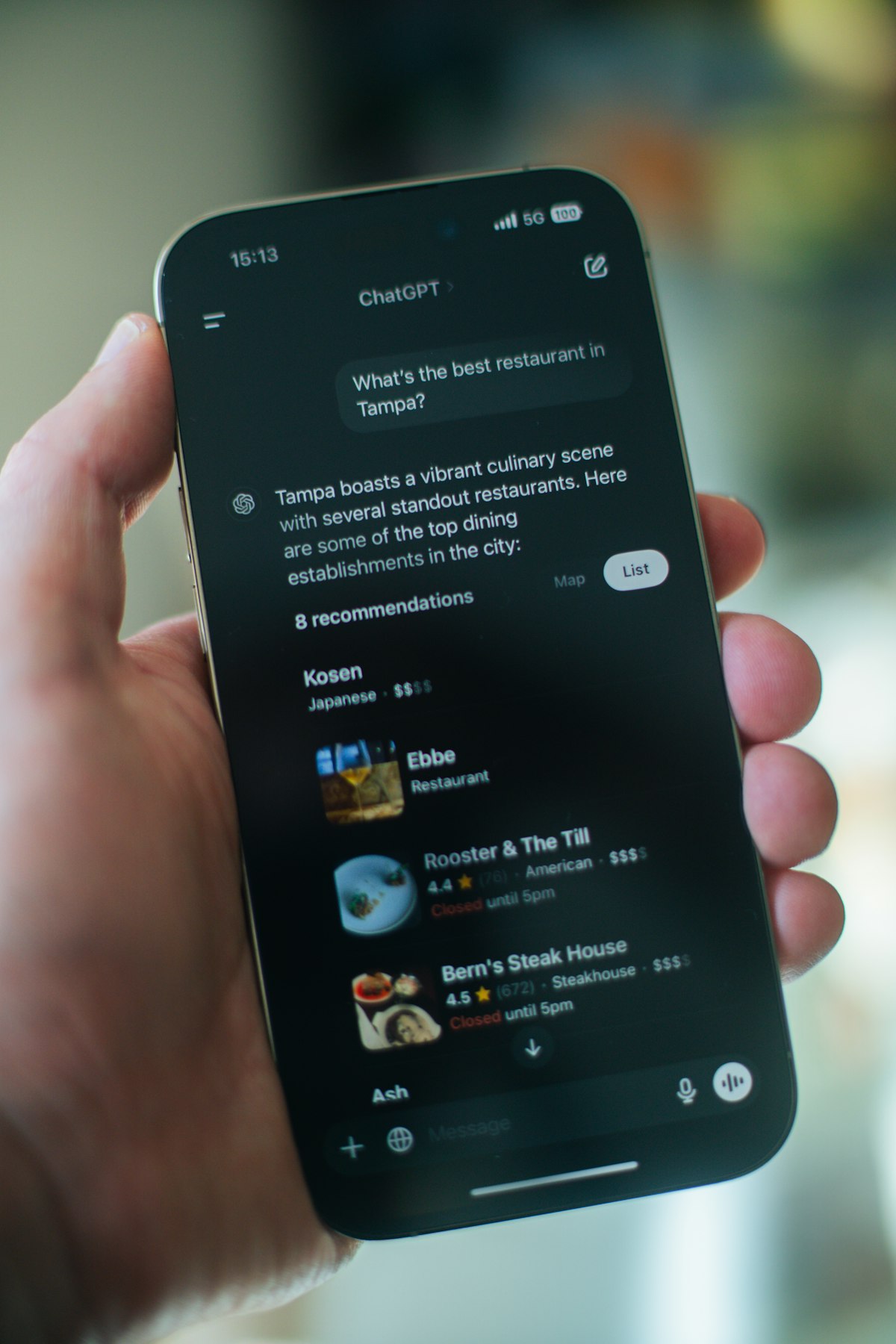
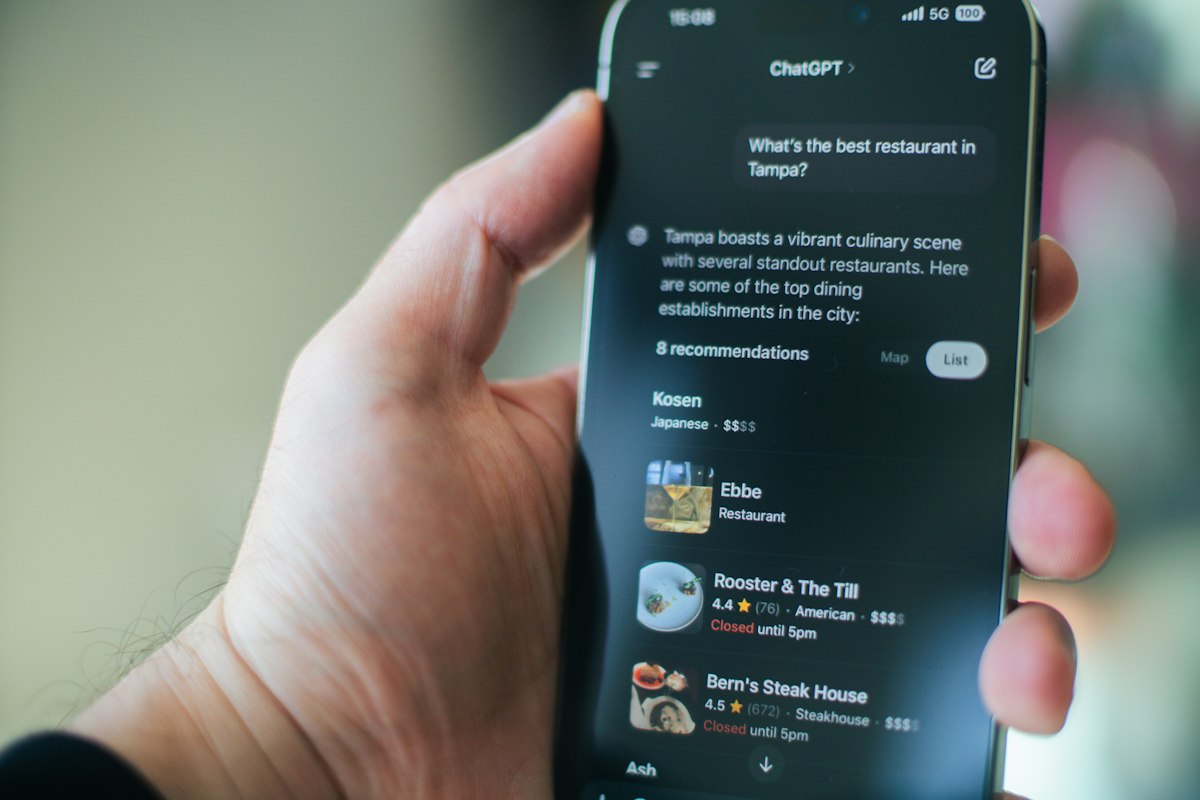
Picture this. A potential customer types into ChatGPT: "Who's the best plumber in Denver?" The assistant names three businesses. Yours isn't one of them. Your website works. Your reviews are decent. You're on Google. But in the conversation that now decides where the money goes, you don't exist.
That scenario isn't a scare story. Two independent benchmarks published this year ran real buyer questions through ChatGPT, Perplexity, Google's AI features, and Gemini — and found the same uncomfortable pattern: AI assistants know most small businesses, describe them politely, and then recommend somebody else.
What the benchmarks actually found
The freshest data landed this week. On October 14, Modern Asset Lab published a benchmark of 100 U.S. small businesses across 10 industries and 11 metro areas. Each business was put through an average of 27.8 blind buyer conversations — real questions, real assistants, the business never named. The assistants: ChatGPT, Google AI Overviews, Perplexity, and Gemini.
The numbers are brutal. Eighty of the 100 businesses landed in the lowest scoring tier. AI never recommended 36 of them at all. Another 31 were never even named. The average score was 50.9 out of 100 — and the breakdown shows exactly where the problem lives. On "can AI find you?" the average was 80 out of 100. On "can AI verify you?" it was 88. But on "does AI actually recommend you?" — the only one that pays — it was 18. A working website, it turns out, is no longer a referral.
The second study is bigger and says the same thing differently. Insites audited 10,000 U.S. local businesses across ChatGPT and Perplexity. Almost all of them — 93.59% — were "known" to ChatGPT. Sounds great until you read on: only about half were described correctly (the most common error was a wrong phone number, in 30% of ChatGPT results), and 40.88% were never recommended in unbranded, intent-driven queries. Awareness doesn't guarantee inclusion in the answer. Being in the training data is not the same as being in the recommendation.
And here's the twist that should change how you measure all this: the top pick moves constantly. BusySeed, a New York marketing agency, tracked 160 buying questions across ChatGPT, Claude, and Gemini every week from April through August 2026. The company named first changed from one week to the next 56.4% of the time. Only 85 of the 480 question-and-assistant pairs kept the same leader for the whole period. A single screenshot of ChatGPT recommending your business tells you about that afternoon. It tells you very little about your brand.
Why this matters more in Africa
Every benchmark above is American. African small businesses weren't in the sample — but the logic cuts harder here, not softer. The U.S. businesses that failed had websites, Google Business Profiles, and reviews. Most African small businesses run on WhatsApp, Instagram DMs, and word of mouth. An AI assistant can't recommend what it can't find or verify. If 40% of American storefronts with full websites never get recommended, a business that exists mostly inside chat threads is starting from much further back.
There's also the buying shift. Consumers increasingly ask an AI assistant before — or instead of — opening a search engine when they need a vendor. The assistant doesn't show ten blue links. It picks one or two and recommends them directly. If your business isn't the kind AI engines feel confident naming, you don't rank lower. You fall out of consideration entirely. Traditional SEO gave you a position; AI gives you a verdict.
The good news is that the studies agree on what actually moves the needle — and none of it requires a budget. Let me be specific.

Five things to do this week
1. Ask the assistants about yourself. Open ChatGPT, Gemini, and Perplexity and ask the questions your customers would ask — not "who is [your business name]?" but "[your service] near me" and "best [your category] for [your town]". You're looking for three things: does it name you, does it describe you correctly, and what does it say about your competitors? The Insites data says there's a decent chance it gets your phone number wrong. That's a fixable leak, and it looks terrible.
2. Reviews are the single strongest lever. In the 10,000-business study, businesses surfaced by both ChatGPT and Perplexity averaged 133.4 Google reviews; businesses surfaced by neither averaged 10.7. That's not a subtle signal. Ask every satisfied customer this week — text them the direct link. Five steady reviews a week beat a hundred bought once.
3. Make your basics identical everywhere. Same business name, same phone number, same address on your Google Business Profile, your website, every directory, and your social bios. Claim your profile if you haven't, fill every field, and add photos. Inconsistent details are the quietest way to fail an AI's confidence check — and Google's own guidance, as reported this week, says there are no special tricks required to appear in its AI features: pages just need to be indexed and eligible in Search. The foundation is the feature.
4. Answer real questions in plain text. One of the strongest signals in the Insites data wasn't a technical trick at all — it was website freshness and content depth. Structured data and llms.txt barely correlated. What worked was a site that clearly answers the questions buyers ask: what do you sell, how much, where, how fast, why you. Write an FAQ page that sounds like you talking to a customer. That's extractable, verifiable, and honest — exactly the kind of text an AI can confidently quote.
5. Measure share, not screenshots. Borrow the BusySeed method. Write down 10 to 30 questions your customers actually ask — pull them from your support chats, your WhatsApp conversations, and your reviews. Ask each one on at least two assistants, once a week, and log whether your business gets named. Judge the share of answers that mention you at the end of each month. Treat a change as real only when it persists for three weeks or the monthly average moves. One bad week is noise; a month of silence is a signal.
What not to do
Don't pay anyone for "AI visibility optimization" this week. The data says the fundamentals are the optimization: reviews, consistent business data, complete profiles, fresh content that answers questions. BusySeed's warning applies double in Africa: premature complexity stalls small teams. A spreadsheet, ten questions, and a reviews habit will tell you more than any dashboard sold to you in a panic.
And stay honest about the timeline. Real gains show up in trend lines, not screenshots — BusySeed's own case study of a family-owned cacao supplier went from being named in 1.3% of Gemini answers in August to 40.9% in September, but that's one client, reported by the agency that did the work. Your version of that is a month of reviews, cleaned-up listings, and fresh content — then checking the monthly read and seeing the share move.
My honest read: AI recommendations are becoming a discovery channel the way Google Maps was ten years ago. The businesses that learn the rules now — reviews, consistency, plain answers, monthly measurement — will be the names AI assistants reach for first. The rest will be very well-known to ChatGPT, and never recommended.